對許多獨居者來說,家的理想樣貌不一定是越大越好,而是在有限的坪數裡,擁有符合自己生活節奏的空間。
本案約十五坪,屋主希望打造一個真正屬於自己的住所,平時能自在地生活、工作與休息,同時也保留家人或朋友來訪時的居住彈性。此外,收納容量也是規劃時的重要需求,屋主希望空間維持簡潔有序,不被雜物占據。
For many people living alone, an ideal home is not necessarily defined by its size, but by how well it supports their daily rhythm of life.
This 15-ping apartment was designed for a homeowner seeking a place that truly belongs to him—a home where he can comfortably live, work, and unwind, while still maintaining the flexibility to accommodate visiting family and friends. Ample storage was also a key priority, ensuring the space remains organized, uncluttered, and easy to maintain.
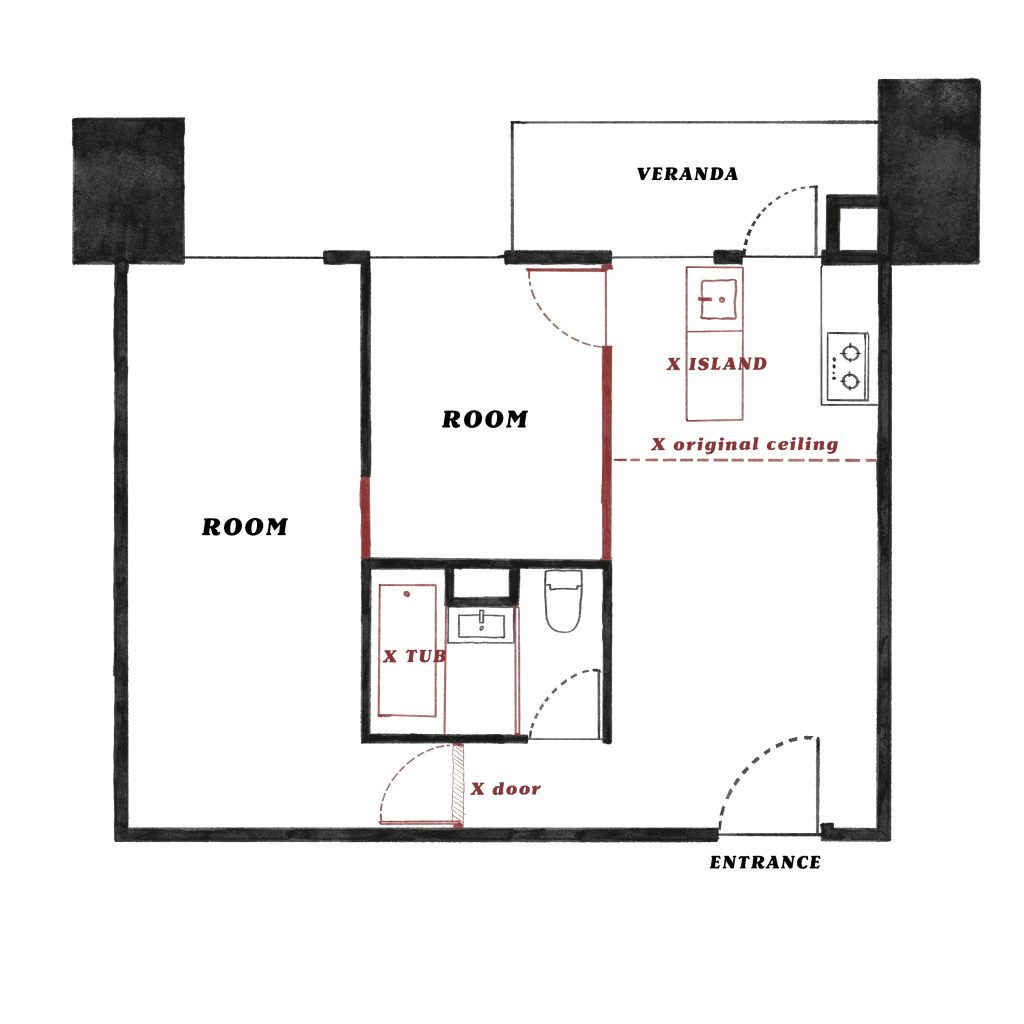
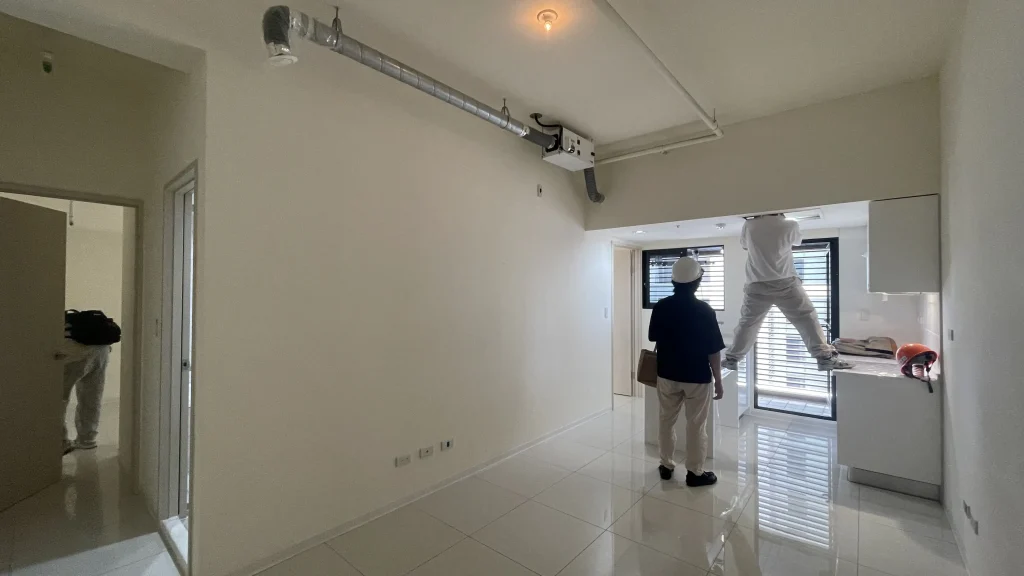
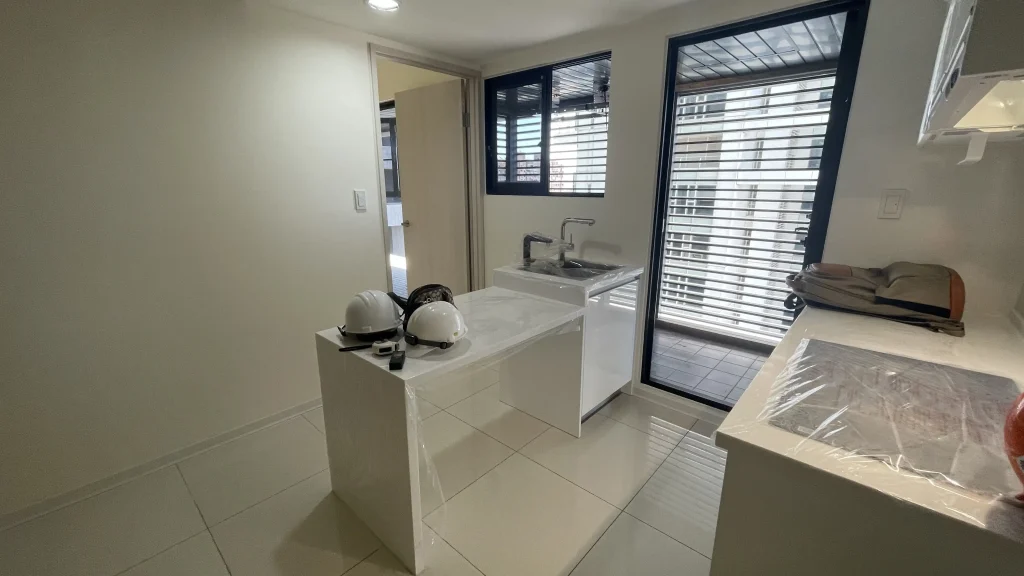
原始格局中,隔間切分較為零碎,公共空間與臥室、廚房之間的關係也較受限制。
因此設計上先從拆除既有隔間開始,重新整理十五坪空間裡的動線、開口與使用關係。透過調整主臥出入口、重塑多功能室與客廳之間的界面,讓原本被分割的坪數重新被打開,形成一個能獨處、能工作,也能接待親友的彈性居所。
The original layout was fragmented by several small partitions, limiting the relationship between the shared living areas, bedroom, and kitchen.
The design process therefore began with selectively removing existing walls and rethinking the circulation, openings, and spatial connections within the apartment. By relocating the bedroom entrance and redefining the boundary between the multi-purpose room and living area, the previously divided floor plan was opened up into a more adaptable home—one that supports solitude, productivity, and social gatherings alike.
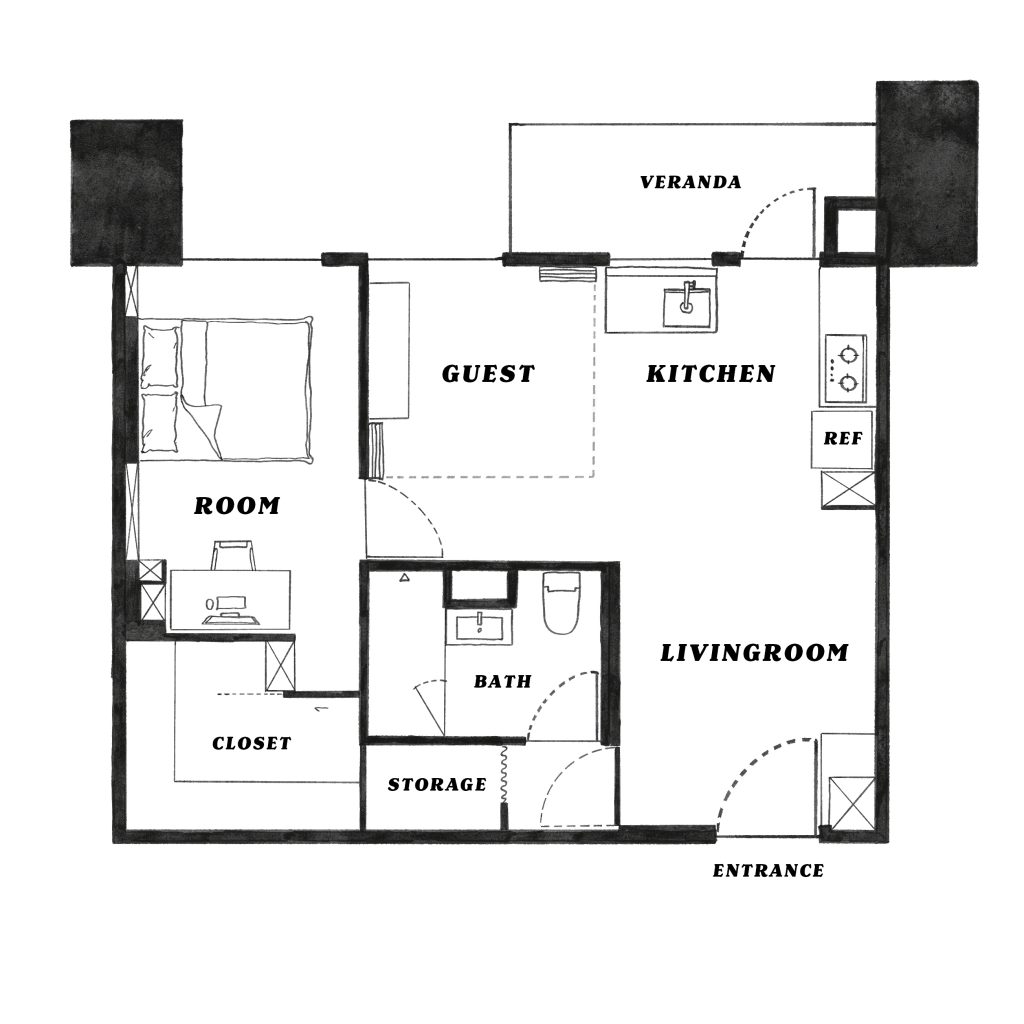
收納規劃則藏在空間的各個角落。原本位於衛浴前方的畸零走道,被重新整理成獨立儲藏室,讓大型用品與生活備品有專屬位置。
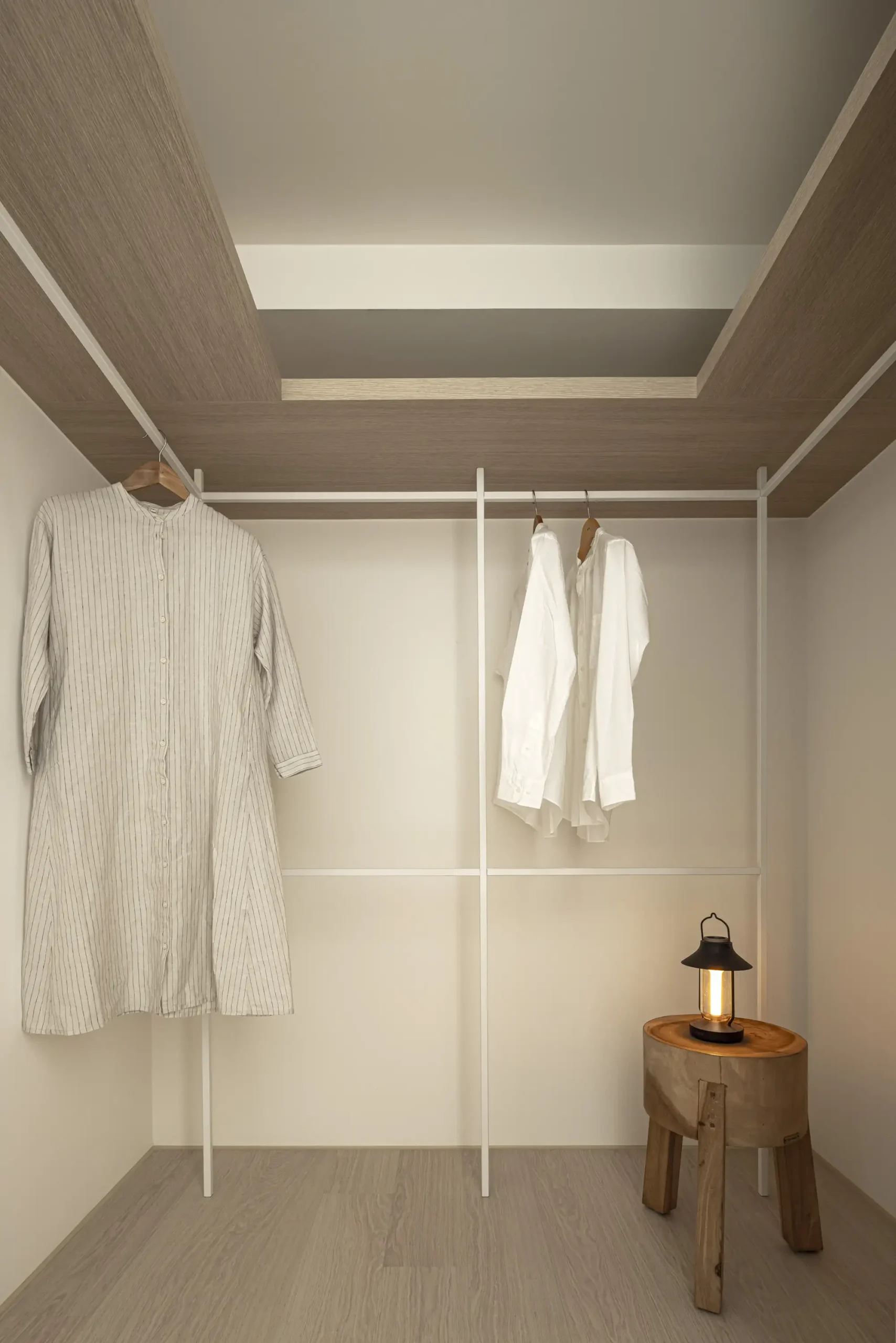
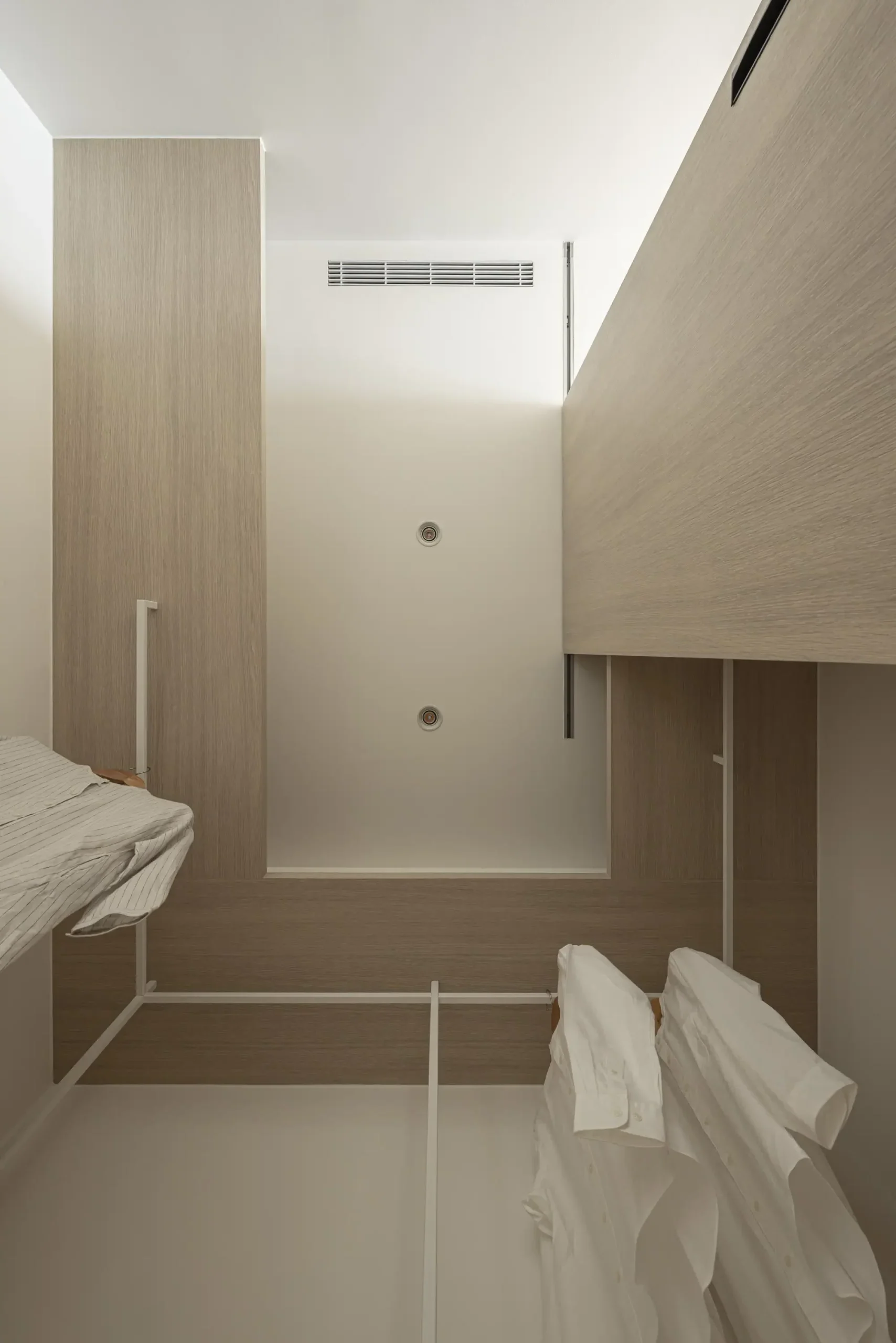
主臥室則規劃完整更衣間,在有限坪數裡盡可能提高收納容量,滿足屋主對於整潔與機能的需求。
Storage solutions are thoughtfully integrated throughout the home. An awkward residual area in front of the bathroom was transformed into a dedicated storage room, providing a place for larger household items and everyday necessities.
In the primary bedroom, a full walk-in closet maximizes storage capacity within the limited footprint, meeting the homeowner’s desire for both functionality and order.
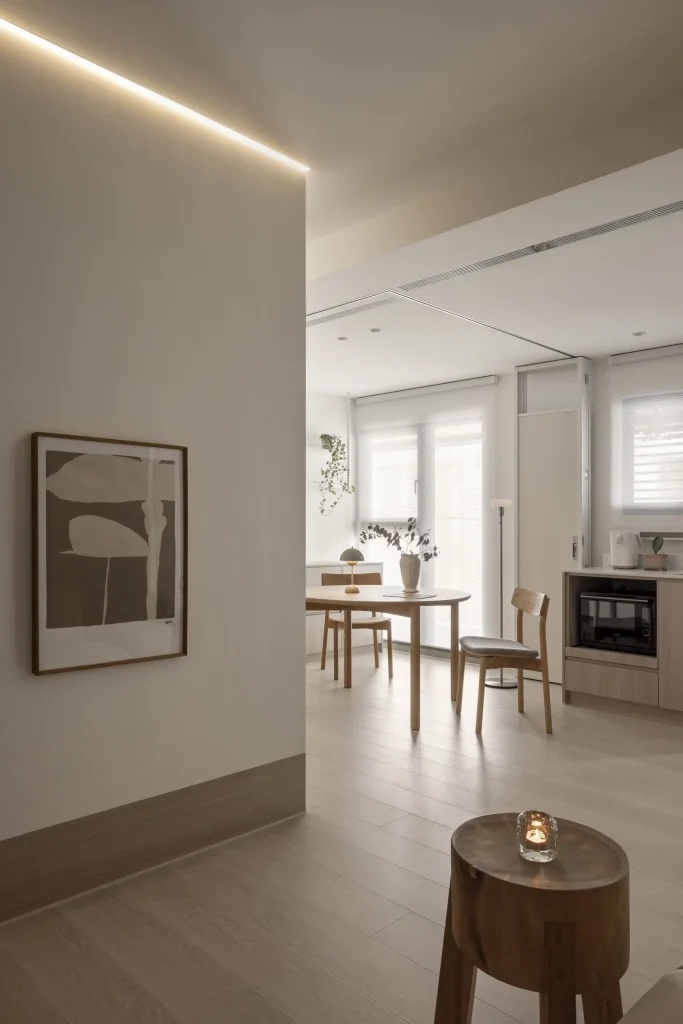
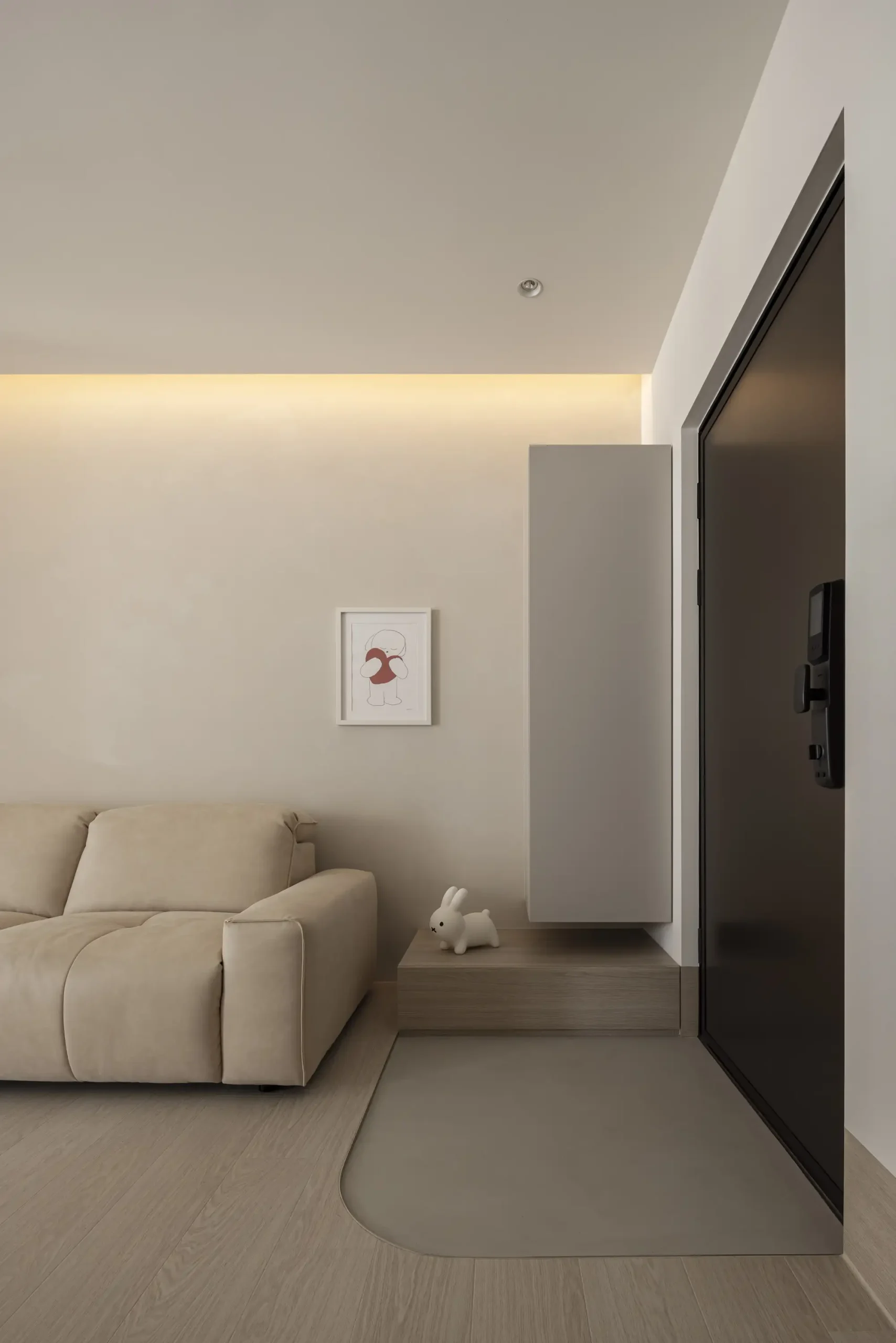
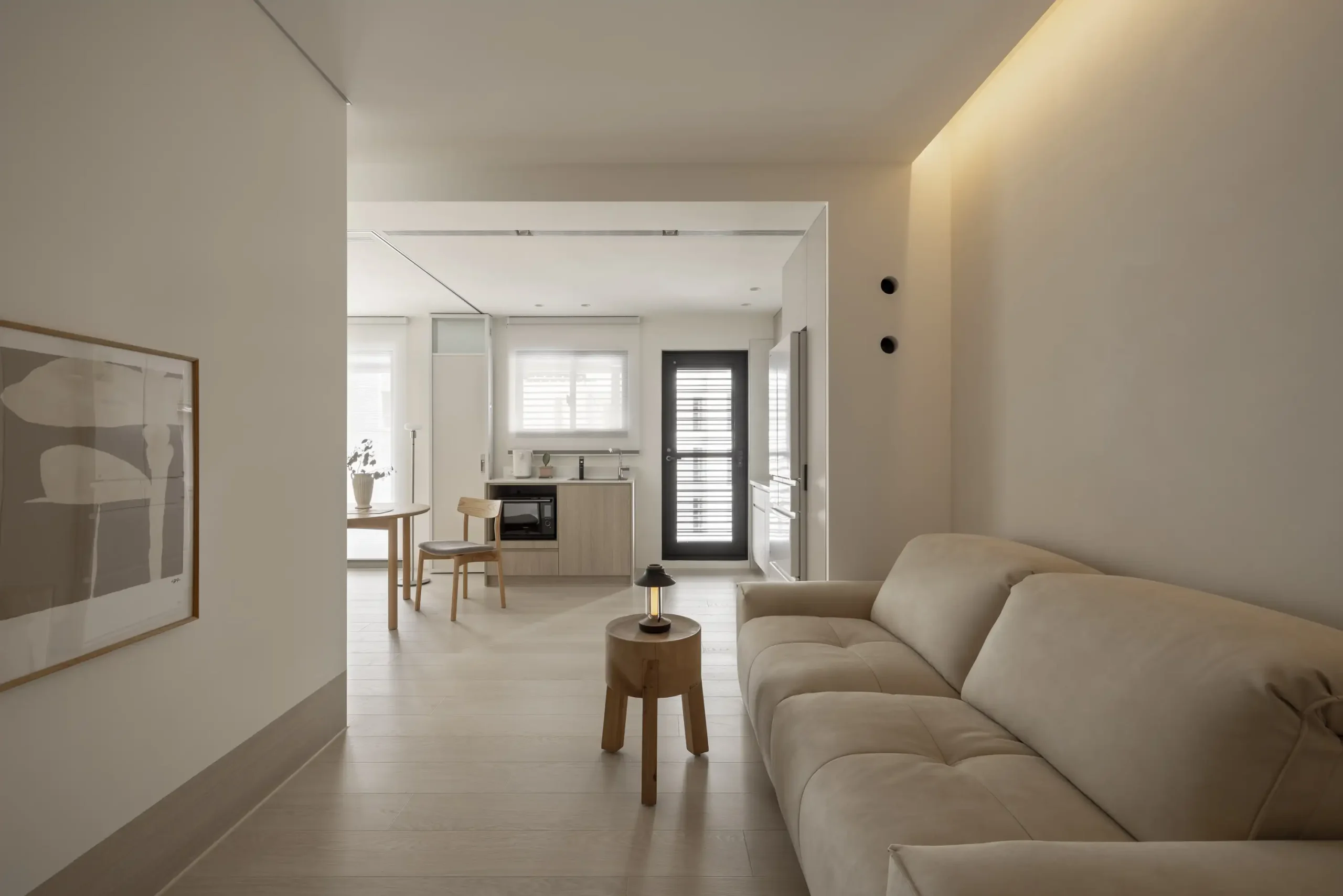
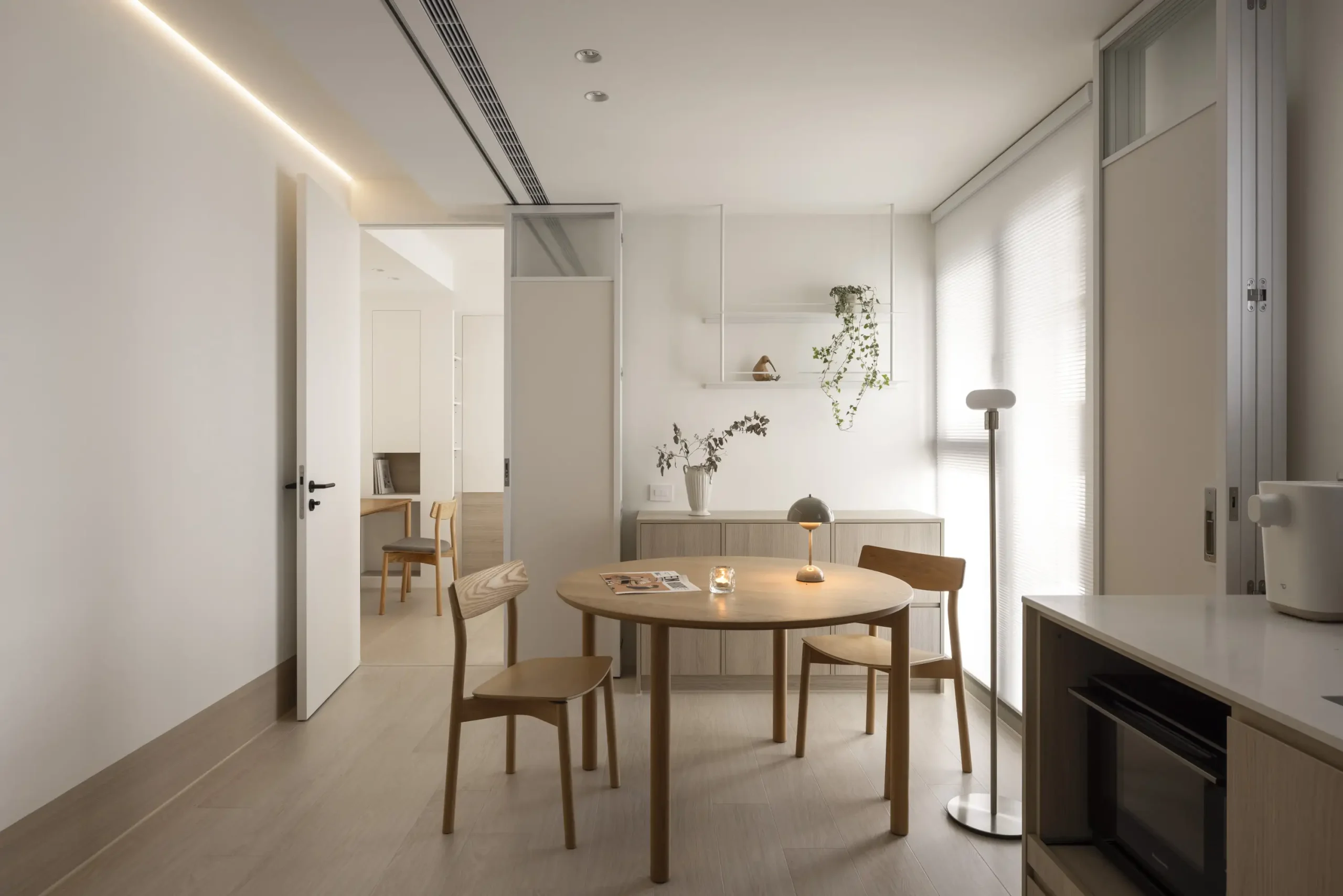
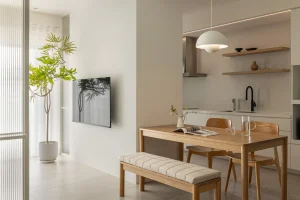
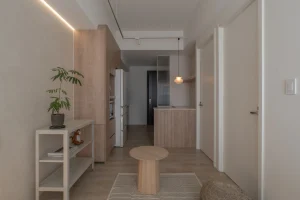
進入空間後,視線可以一路延伸到窗邊,公共區域以開放的方式串聯客廳、餐廚與多功能室,讓整體感受比實際坪數更顯寬敞。
材質選擇上,以溫潤木質搭配淺色牆面作為基底,減少過多裝飾,讓生活本身成為空間的主角。
Upon entering, the eye is naturally drawn toward the windows, creating a sense of openness that extends throughout the home. The living room, dining area, kitchen, and multi-purpose room are connected through an open-plan arrangement, allowing the space to feel more expansive than its actual footprint. Warm wood tones and soft neutral walls form the foundation of the interior palette, while unnecessary ornamentation is kept to a minimum, allowing everyday life itself to become the focal point.
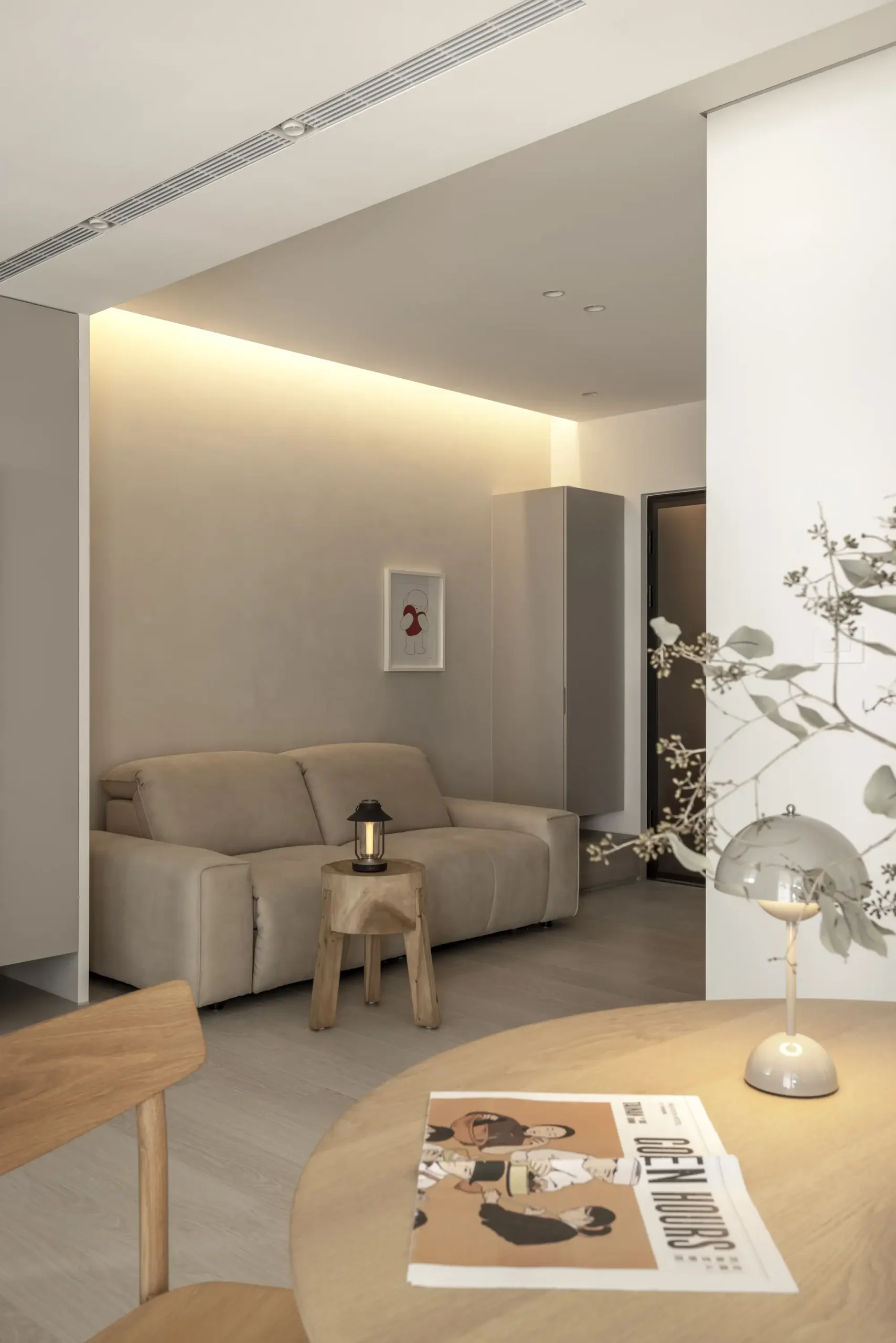
考量屋主平時的生活習慣,客廳並沒有以電視牆作為空間核心,而是保留大面積牆面作為投影使用。
少了大型電視與厚重櫃體後,視覺更加輕盈,也讓客廳能有更多使用可能。
Reflecting the homeowner’s daily habits, the living room was intentionally designed without a conventional TV wall as its focal point.
Instead, a large blank wall was preserved for projection use. By eliminating the visual weight of a television and oversized media cabinetry, the space feels lighter and more open, while offering greater flexibility for different activities.
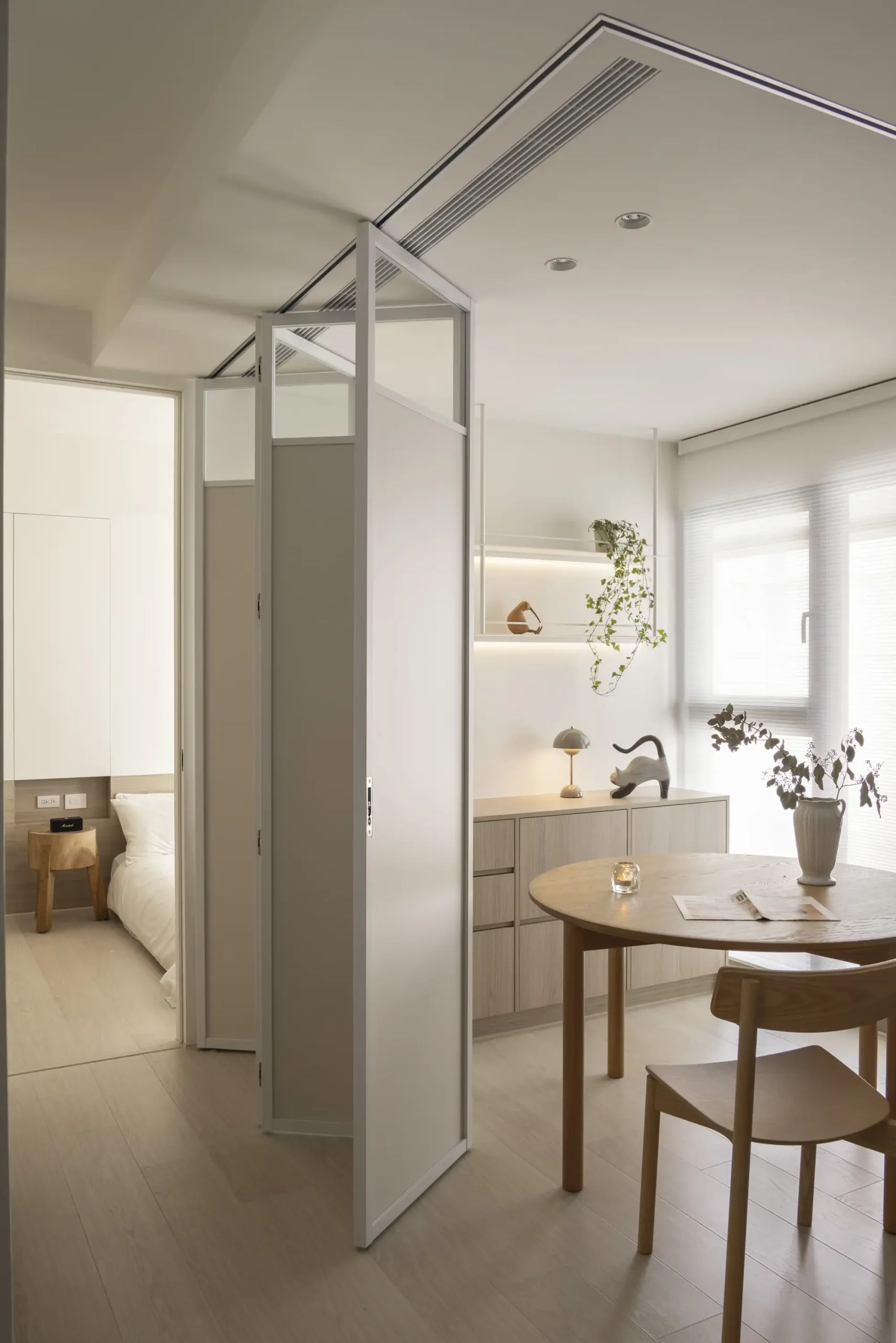
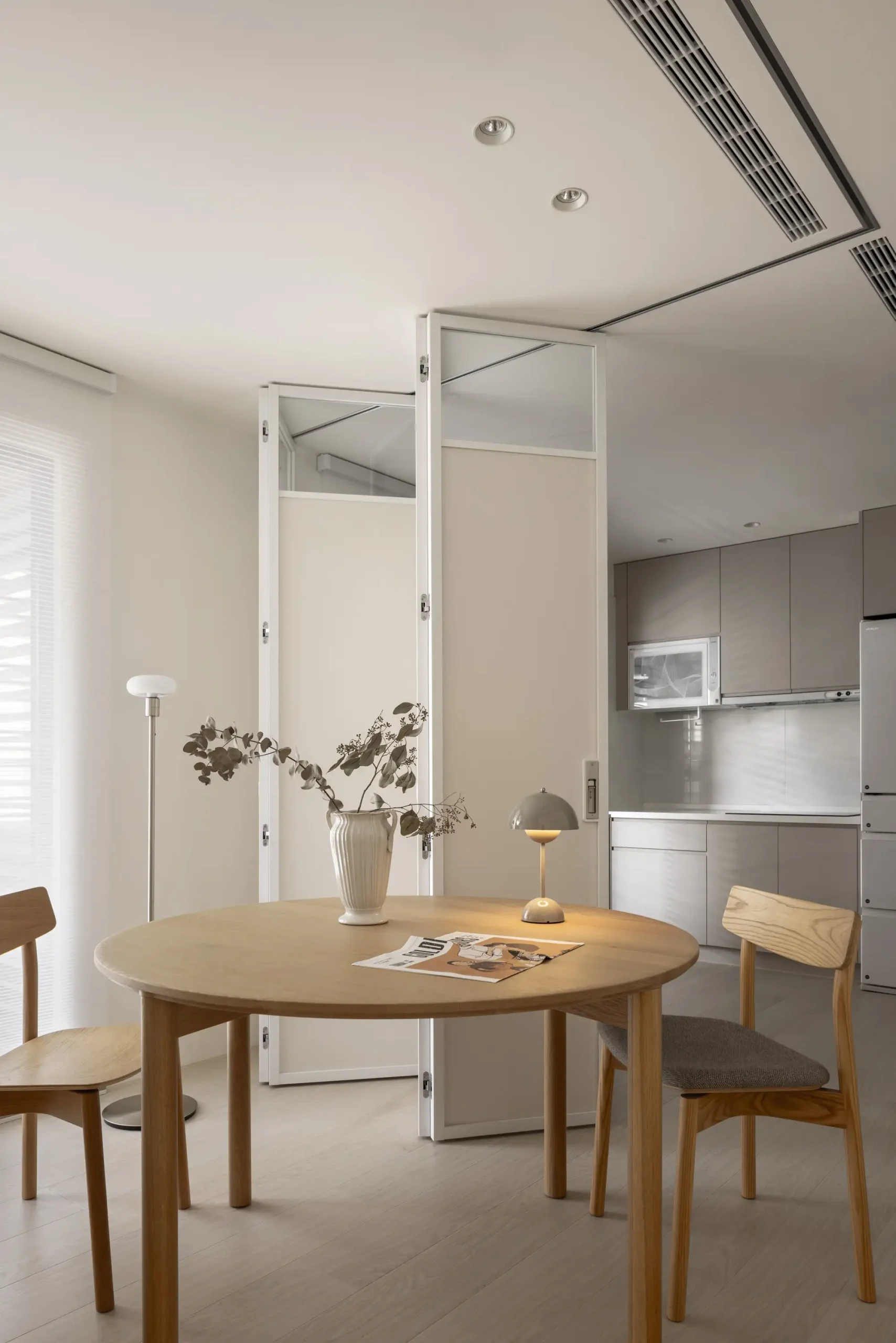
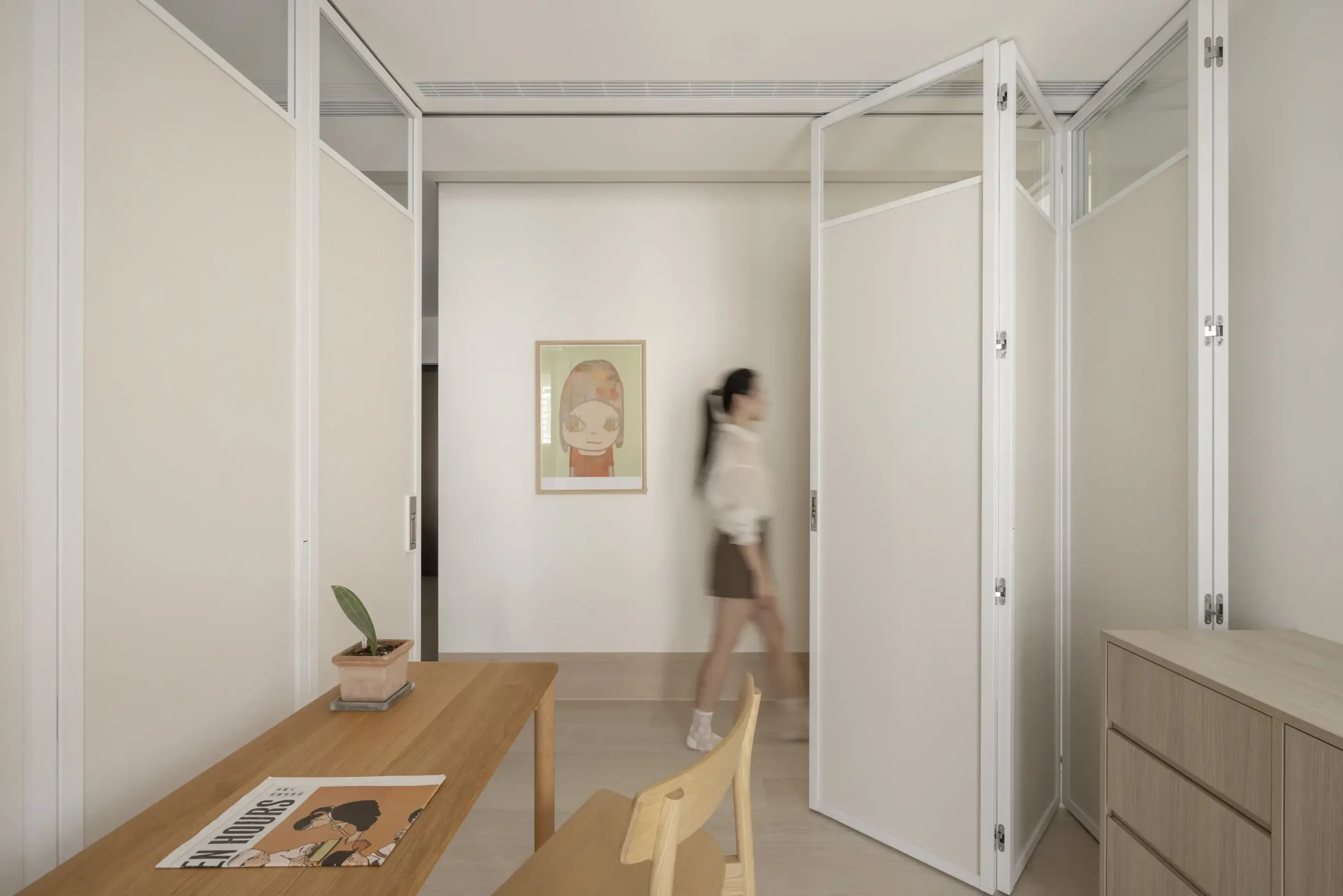
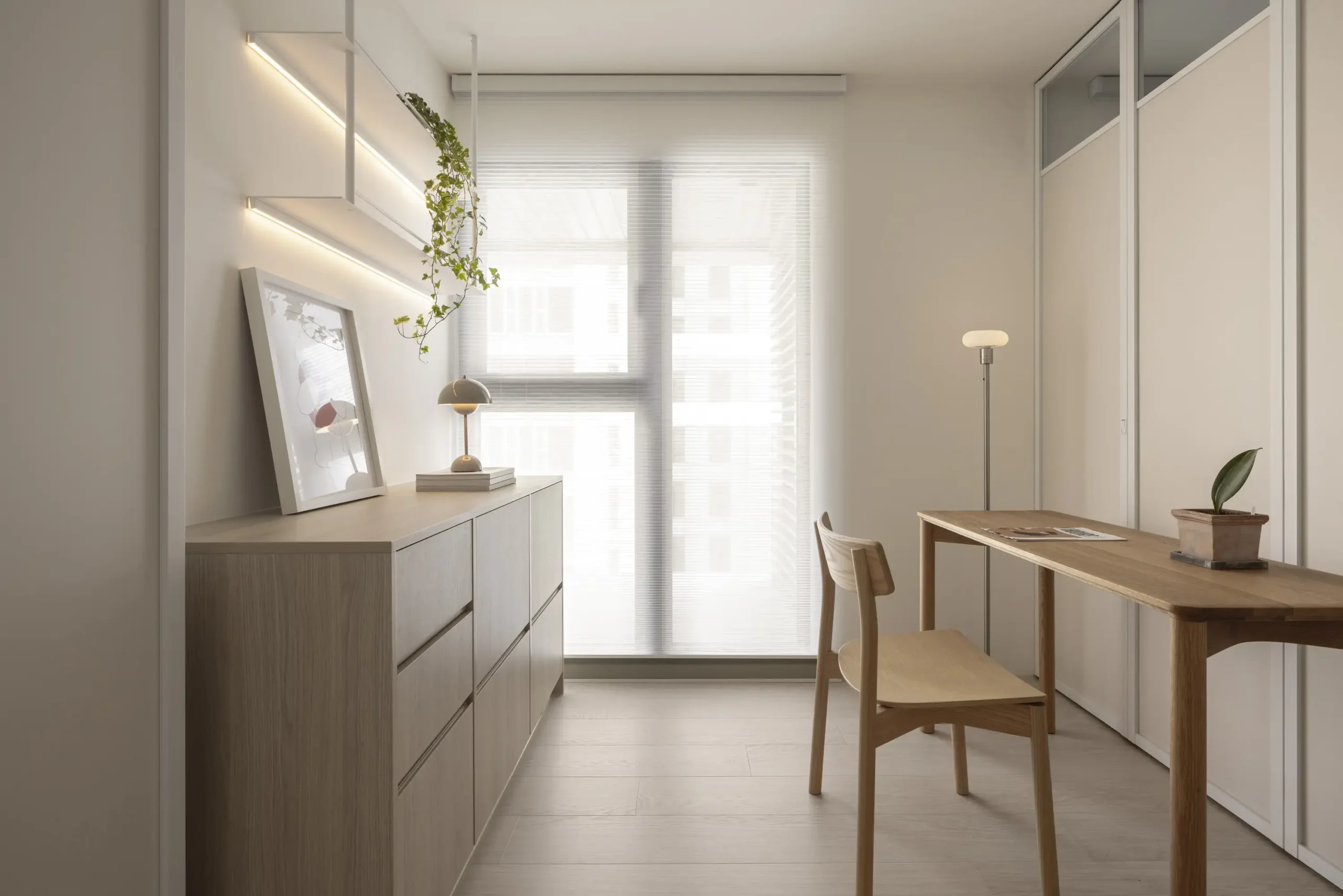
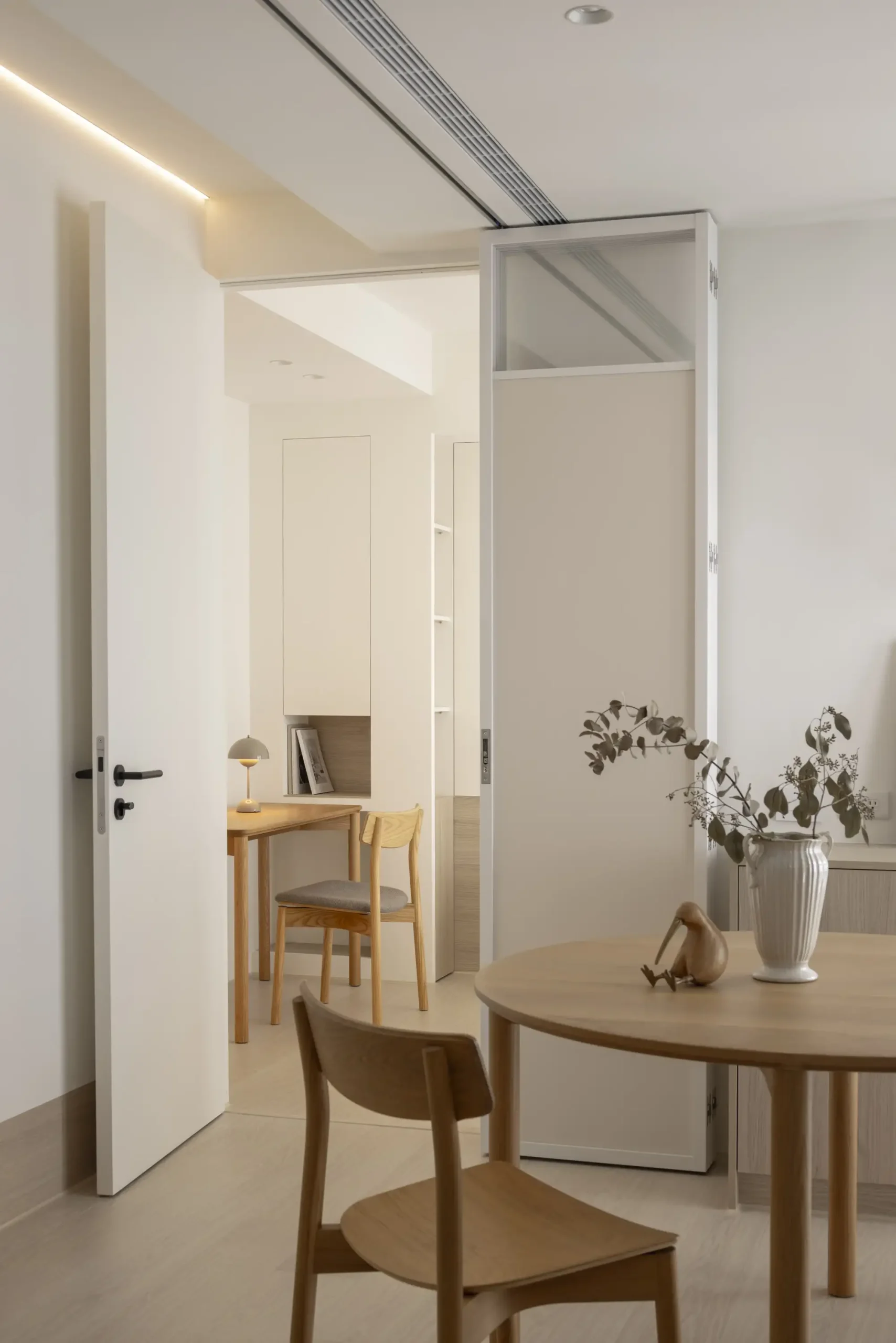
位於客廳與廚房之間的多功能室,是本案最重要的彈性空間。我們以摺疊門取代固定隔間,平時打開時,客廳與餐廚區域能自然串連,放大整體公共空間;當家人或朋友留宿時,則可關起門片,成為獨立客房或書房使用。
Positioned between the living room and kitchen, the multi-purpose room serves as the most flexible element of the home. Instead of a fixed partition, folding doors were introduced to create a space that can easily adapt to changing needs. When opened, the room seamlessly expands the living and dining areas, enhancing the sense of openness. When closed, it transforms into a private study or guest room for overnight visitors.
廚房部分保留既有設備配置,透過更換櫃體門板與材質色調,讓整體空間擁有一致的視覺語彙,也在預算與使用機能之間取得平衡。
In the kitchen, the original cabinetry and layout were retained, while the cabinet fronts were replaced to align with the overall material palette of the home. This approach maintained functionality and budget efficiency while establishing a more cohesive visual language throughout the interior.
多功能室旁的系統邊櫃也兼具收納與機能延伸的角色。
平常可以作為展示與收納空間,聚會時則能成為廚房檯面的延伸區域,放置咖啡機、小家電或餐敘備品,讓空間更能因應不同生活情境。
Adjacent to the multi-purpose room, a custom storage cabinet serves both practical and social functions.
On a daily basis, it provides display and storage space; during gatherings, it acts as an extension of the kitchen countertop, accommodating a coffee machine, small appliances, or serving essentials. This added flexibility allows the home to respond naturally to different lifestyles and occasions.
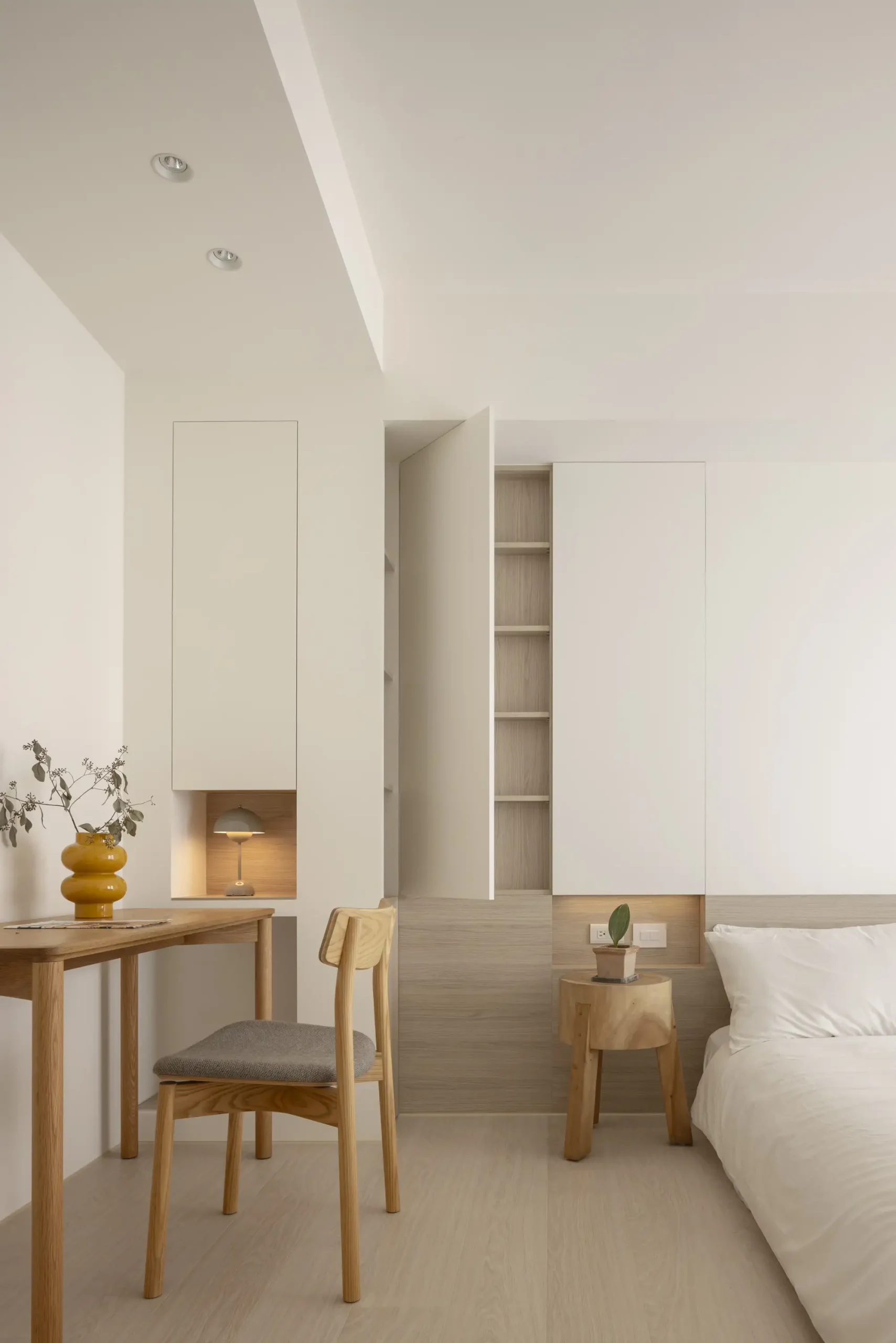
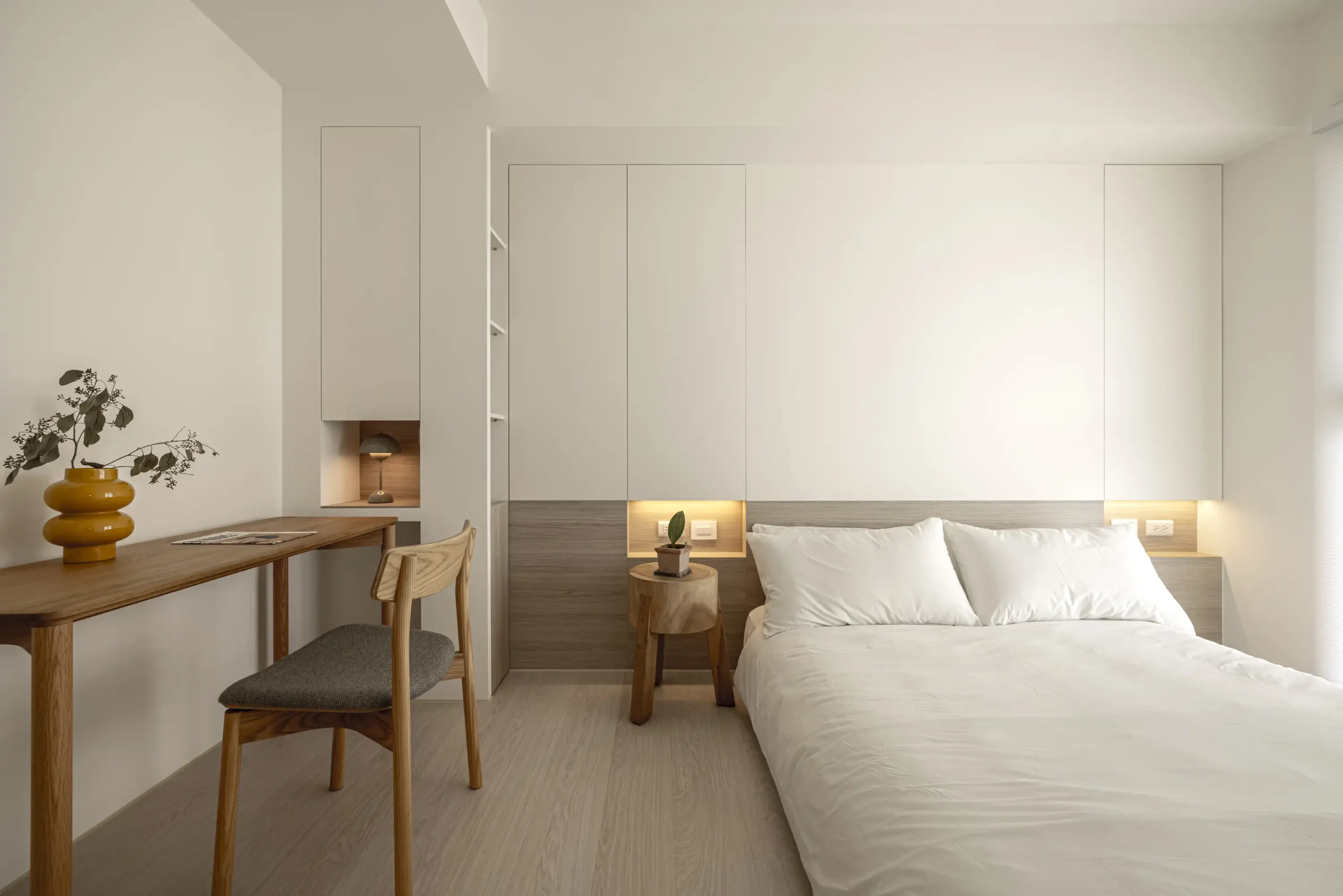
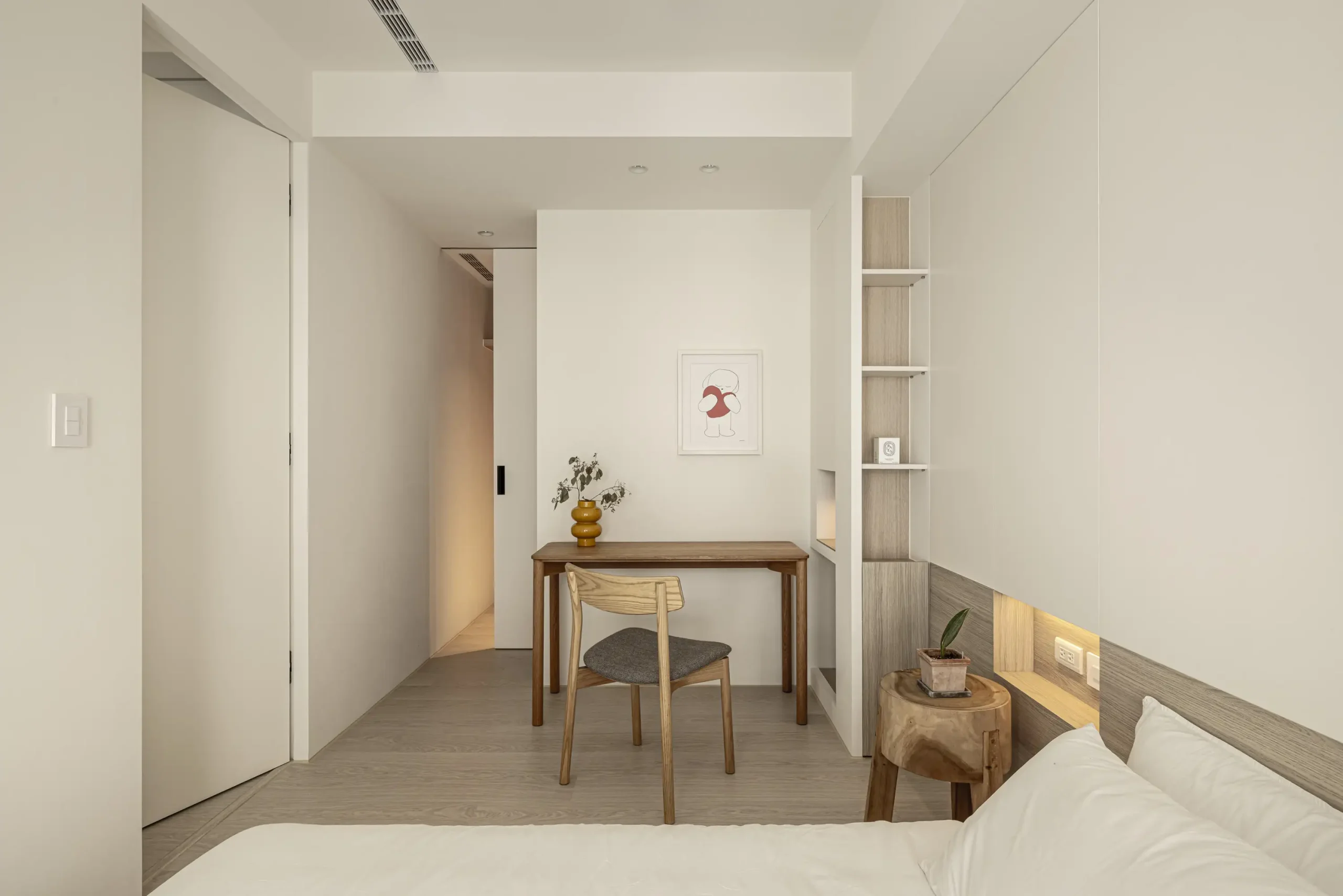
主臥的配置也因生活方式而有所調整。我們與屋主討論後,將房門設定為外開設計,讓屋主平時獨自在家時能維持敞開狀態,使光線、空氣與視線自然流動,增加空間之間的連結感。床頭上方原有的大樑則透過木作加厚整合,弱化結構帶來的壓迫感,同時形成溫潤的床頭端景。
The primary bedroom was also reconfigured to better suit the homeowner’s lifestyle. The bedroom door was designed to swing outward, allowing it to remain open during daily use and encouraging a more natural flow of light, air, and sightlines throughout the home. Above the bed, an existing structural beam was concealed within a thickened custom headboard detail, reducing its visual weight while creating a warm and cohesive focal point.
我們希望這個家不是被固定功能定義的空間,而是一個能隨著生活改變而調整的住所。無論是一個人安靜地生活,或是與親友相聚共享時光,都能在這十五坪裡找到最舒服的使用方式。這或許也是「日常之間」最重要的樣子——讓生活回到自己喜歡的節奏。
Ultimately, this project was never intended to be a home defined by fixed functions. Instead, it was designed as a living environment that can evolve alongside its occupant. Whether enjoying the quiet comfort of living alone or sharing meaningful moments with family and friends, the homeowner can find a way of living that feels most natural within these fifteen ping.
Perhaps that is the essence of “In Between”—a home that exists between work and rest, solitude and companionship, openness and privacy, allowing life to settle into its own comfortable rhythm.